Low-carbon Road, Economic Development Zone, Maoji Experimental Zone, Fengtai County, Huainan City, Anhui Province, China +86-13381996978 iris@qyplush.com
Follow Us -
News

How to Customize a Plush Toy from an Idea to a Production-Ready Product

2026-08-31 0 Leave me a message

Custom plush toys are often easy to imagine but much harder to produce consistently. A buyer may start with nothing more than a character sketch, a product reference, or even a simple idea such as a doughnut, animal, mascot, or food-shaped cushion. Turning that idea into a plush product requires decisions about the shape, fabric, filling, sewing structure, accessories, size, packaging, and production tolerances.

For brands, gift companies, promotional suppliers, and online retailers, these details directly affect the final appearance, unit cost, lead time, and customer experience. Working with an experienced plush toy manufacturer can help buyers move from an initial concept to a production-ready product with fewer unnecessary revisions.

1. Start with the Product Concept, Not the Fabric

The first step in custom plush development is not choosing a fabric. It is defining what the finished product needs to look and feel like.

A buyer may provide a hand-drawn sketch, character illustration, product photograph, 3D rendering, existing plush sample, or simply a description of the desired product. The more useful information provided at the beginning, the easier it is for the manufacturer to understand the project and evaluate how it can be produced.

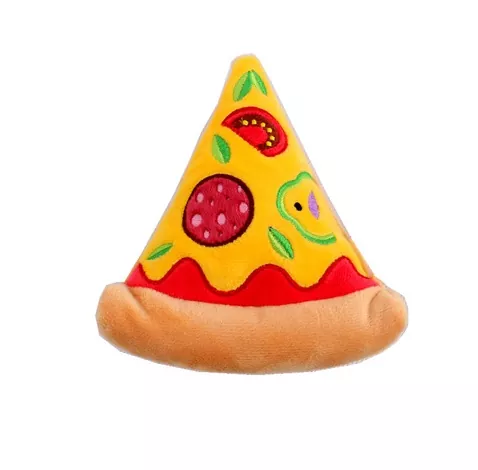
For example, a customer developing a food-shaped plush key ring may already know the desired size, colors, facial expression, hanging position, and approximate weight. Another customer may only have a character drawing. These two projects require very different levels of product development.

For an initial inquiry, it is useful to provide the target size, reference artwork, expected quantity, preferred fabric, required accessories, packaging requirements, and intended application if these details are already available.

2. The Shape Determines More Than Appearance

One of the biggest differences between a drawing and a finished plush toy is three-dimensional structure. A character may look simple from the front but require several fabric panels to reproduce its shape accurately.

Curved surfaces, small limbs, ears, tails, facial features, and recessed areas can all affect the sewing pattern. A manufacturer needs to consider how the different pieces will be cut, joined, filled, and shaped during production.

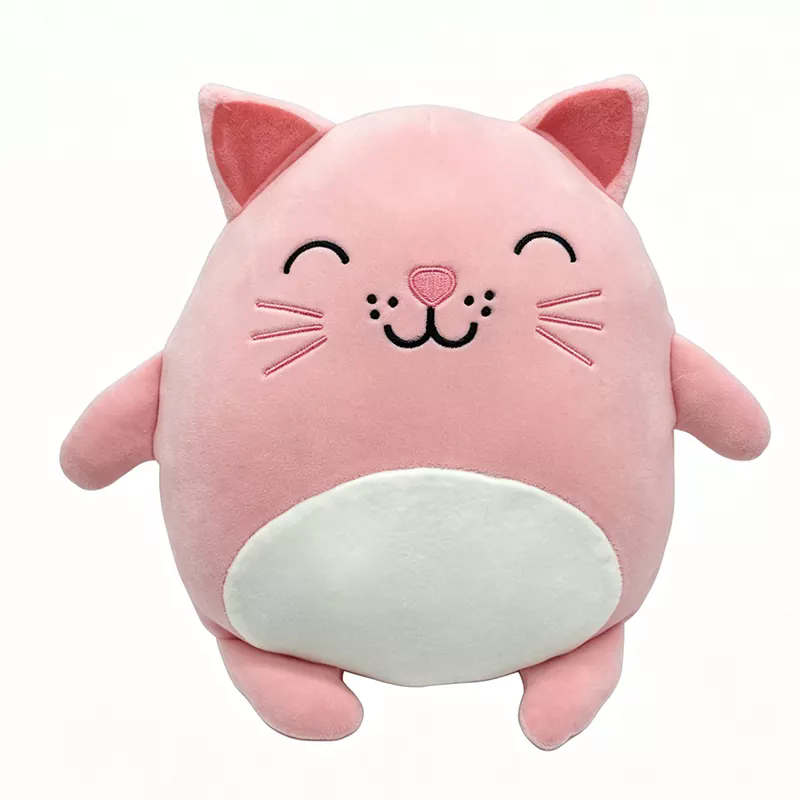
For example, a round plush product may appear to be a simple shape, but the manufacturer still needs to consider:

  • How many fabric pieces are required
  • Where the seams should be positioned
  • How the filling will distribute inside
  • Whether the product can maintain its shape after compression
  • Where the opening for stuffing should be placed
  • How the hardware or accessory will be attached

Poor pattern construction can make a plush toy look noticeably different from the original design even when the correct fabric and colors are used. This is why prototype development is an important part of custom plush production rather than simply a formality before mass production.

3. Choosing the Right Plush Fabric

Fabric has a major influence on both appearance and cost. Different fabrics produce different surface effects, hand feels, and levels of softness. Super-soft velour, plush, fleece, minky-style fabrics, polyester fabrics, and other textile materials can be selected according to the required product effect.

For a character plush, a soft and comfortable surface may be preferred. For products designed to imitate food, animals, or specific textures, the fabric may need to balance softness with the visual appearance of the original object.

Buyers should not select fabric based only on a photograph. A material that looks similar on screen may feel completely different in person. Fabric thickness, pile length, stretch, surface texture, and color can all affect the finished product.

For this reason, fabric selection is usually best confirmed during the sample stage.

Fabric Selection Should Also Consider Production

A fabric can look excellent on a sample but still create production challenges. Stretchy materials may require more careful sewing control. Longer-pile fabrics can make small embroidered details less clear. Certain materials may also behave differently when cut, sewn, stuffed, or compressed during packing.

For larger orders, the most attractive material is not necessarily the most practical material. A better choice is usually the fabric that provides the required appearance and hand feel while remaining stable and manageable during repeated production.

4. Filling Affects the Shape and Hand Feel

PP cotton is commonly used as plush filling because it provides a soft feel while allowing the product to recover its shape. However, the amount and distribution of filling matter just as much as the material itself.

Too little filling can make the plush toy look flat or uneven. Too much filling can make it excessively hard and may change the intended proportions.

For a character with thin arms or small details, uneven stuffing can also cause one part of the product to look different from another. During mass production, the factory therefore needs to maintain consistency in both filling and shaping.

For customized products, buyers should confirm the desired firmness during the sample stage rather than waiting until mass production.

5. Why the First Sample Is Not Always the Final Sample

A common misunderstanding in custom plush development is that the first prototype should immediately look exactly like the final product. In reality, the first sample often reveals details that cannot be fully judged from drawings or digital images.

A buyer may discover that the head is slightly too large, the body needs more filling, the colors need adjustment, the facial features need to move, the hanging loop is in the wrong position, or the product feels too soft or too firm.

These changes are normal during product development. A physical prototype allows the buyer and manufacturer to evaluate the actual proportions, materials, workmanship, and overall appearance before mass production.

QiYuan's sample time is generally around 7–15 days for a prototype, while each additional round of amendments can take around 10 days depending on the project.

For buyers working toward a seasonal launch, these potential revision rounds should be included in the product development schedule from the beginning.

6. Custom Plush Toys Are More Than Sewing

A finished plush product may involve several processes rather than simply cutting fabric and sewing it together. Depending on the design, production can include pattern development, fabric cutting, printing or embroidery, sewing, filling, shaping, assembly, trimming, inspection, metal detection, and packaging.

Not every project requires every process. A simple plush key ring may have a relatively straightforward structure, while an IP character with embroidered facial features, accessories, multiple fabrics, and customized packaging can require considerably more production steps.

This is one reason why two plush products with similar dimensions can have very different quotations.

The unit price should therefore be evaluated together with the construction, materials, accessories, workmanship, quantity, and packaging requirements.

7. Small Accessories Can Create Big Quality Problems

For plush key rings and other hanging products, the metal hardware is part of the product rather than just an accessory. The attachment point needs to be positioned correctly and secured properly.

If the hardware is installed too close to a seam or attached to an unsuitable section of the plush structure, it can affect durability during repeated use.

The same principle applies to key rings, metal clips, straps, hanging loops, labels, zippers, and other decorative accessories.

For customized products, these details should be shown clearly in the product specification or approved sample. A small change in hardware can affect both the appearance and production cost.

8. MOQ Is Closely Related to the Product Design

MOQ is one of the first questions most buyers ask, but there is no single MOQ that applies to every custom plush toy.

The required quantity can depend on the product size, fabric, construction, material availability, and customization requirements.

For example, a simple design using commonly available materials may be easier to produce at a lower quantity than a complicated product requiring special fabric colors, customized accessories, or multiple components.

For QiYuan's plush products, a general MOQ is around 1,000 pieces, although the actual requirement depends on the sample size and fabric requirements.

If a buyer is developing several designs, it can also be useful to discuss the entire product range with the manufacturer instead of treating every design as a completely separate project. This allows the factory to evaluate material usage and production arrangements more efficiently.

9. How to Control Custom Plush Toy Costs

The cheapest quotation is not always the lowest-cost solution. A plush product's final cost can be affected by product size, fabric type, fabric consumption, filling quantity, number of sewing pieces, embroidery or printing, accessories, packaging, order quantity, sample revisions, and special materials.

If the target price is important, it is better to communicate it during the development stage.

For example, a buyer with a strict retail price may choose to reduce the product size slightly, simplify the construction, use fewer accessories, or select a more readily available fabric.

These changes are usually easier to make before the final sample is approved.

Cost control is therefore not simply about asking the factory to reduce the unit price. It is about finding the right product structure for the target market.

10. Quality Control Should Begin Before Mass Production

Plush toy quality cannot be solved entirely through final inspection. A better approach is to establish the production standard before the production line starts.

At QiYuan, the approved sample can be used as the production reference. Before mass production, workers are informed about the product requirements and points requiring particular attention.

During production, inspections can be carried out at different stages, with particular attention to sewing and finishing. Defective pieces can then be identified and reworked rather than allowing problems to continue into the finished-product stage.

For plush products, common inspection points include:

  • Overall dimensions
  • Shape and symmetry
  • Sewing quality
  • Loose threads
  • Filling distribution
  • Embroidery position
  • Color consistency
  • Accessory attachment
  • Surface appearance
  • Packaging condition

For products containing metal components, metal detection can also be performed before packaging.

This type of process is more meaningful to buyers than simply stating that a factory has “strict quality control.”

11. What Should Be Included in a Custom Plush Toy Specification?

Before production begins, buyers should try to establish a clear product specification. A practical specification does not need to be complicated, but it should cover the details that can affect the finished product.

Item Information to Confirm
Product Type Plush toy, plush key ring, cushion, bag, or other product
Finished Size Height, width, diameter, or other key dimensions
Fabric Material, texture, pile length, and color
Filling PP cotton or other specified filling
Colors Reference color or Pantone code if available
Features Embroidery, printing, appliqué, accessories, and other details
Hardware Key ring, clip, loop, strap, or other attachment
Workmanship Sewing and finishing requirements
Packaging Individual bag, box, label, customized packaging, etc.
Quantity Target order quantity
Sample Approved reference sample
Inspection Required quality checkpoints

The purpose of this specification is not to make the project complicated. It is to reduce misunderstandings between the buyer and manufacturer.

12. From Character IP to Retail Product

Custom plush toys are used as physical products for brands, character IPs, promotional campaigns, gifts, events, and online retail.

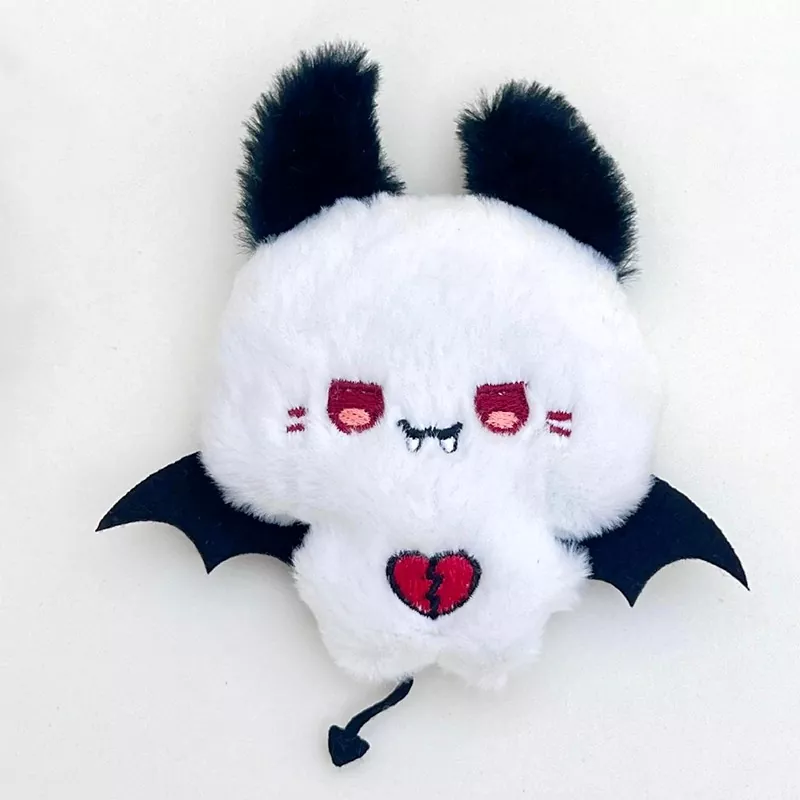
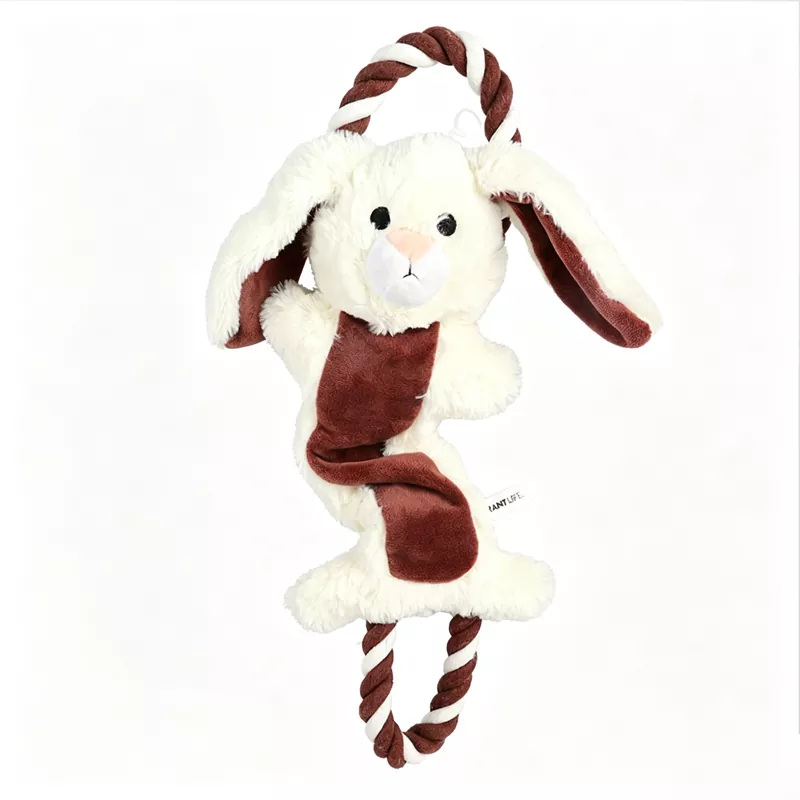
The same character can also be developed into different product formats. For example, a character concept may become a standard plush toy, mini plush key ring, plush bag charm, cushion, plush backpack, pet toy, or seasonal gift item.

This gives brands more flexibility when building a product collection.

A small plush key ring can also serve as a lower-price entry product for customers who may not purchase a larger plush toy. For brands developing an IP collection, it is therefore useful to think about the product family from the beginning rather than designing every item independently.

13. Questions Buyers Should Ask a Plush Toy Manufacturer

Before placing an order, buyers should have clear answers to several practical questions.

Can the Factory Develop Samples from My Artwork or Reference?

This determines whether the supplier can support the product development stage rather than only manufacture an existing design.

What Is the MOQ for My Specific Design?

Do not rely only on a general MOQ. The actual requirement may change according to the materials, product size, and construction.

How Long Will the Prototype Take?

Sample development needs to be included in the overall product launch schedule, especially for seasonal products or promotional campaigns.

What Happens If the Sample Needs Modification?

Clarify the expected amendment process before development begins so both sides have a realistic understanding of the project timeline.

How Is the Approved Sample Used During Mass Production?

The approved sample should provide a physical reference for production workers and quality inspectors.

Which Quality Checks Are Performed During Production?

Ask about process inspection rather than only final inspection. Sewing, filling, finishing, accessory attachment, and packaging can all affect the final product.

Can the Factory Provide OEM or ODM Support?

This is particularly important when the buyer does not already have a production-ready design and needs support from concept development through manufacturing.

14. A Practical Workflow for Custom Plush Development

For buyers starting a new plush project, the process can be kept straightforward.

Step 1: Send the Design

Provide the artwork, reference image, existing sample, or product concept.

Step 2: Confirm the Basic Requirements

Discuss size, material, colors, filling, accessories, packaging, quantity, and target application.

Step 3: Develop the Prototype

The factory converts the concept into a physical sample so the buyer can evaluate the actual product.

Step 4: Review and Modify

Check the proportions, colors, hand feel, details, accessories, and overall appearance.

Step 5: Approve the Final Sample

The approved sample becomes an important reference for mass production.

Step 6: Begin Mass Production

Production follows the confirmed specifications and approved sample requirements.

Step 7: Inspect and Package

Products are inspected during production and at the finishing stage before packaging. Where required, metal detection can be performed before the products enter the packaging stage.

This workflow gives both sides a clear point of reference and helps reduce unnecessary communication during mass production.

15. Choosing a Plush Manufacturer for Long-Term Cooperation

For a one-time order, price may appear to be the most important factor. For repeated product development, however, the manufacturer's ability to communicate, develop samples, maintain production consistency, and respond to changes can become equally important.

A suitable supplier should be able to understand the buyer's design requirements and explain what needs to change when a design is difficult to manufacture.

For brands developing multiple products, this can save considerable time during product development and reduce the number of avoidable revisions.

QiYuan is a direct plush toy factory located in Huainan, Anhui, China. The company focuses on plush toys, plush pet toys, plush bags, home cushions, and customized plush products, providing OEM and ODM cooperation for customers.

Its production process covers sample development, sewing, filling, finishing, inspection, and packaging, allowing customers to work with one manufacturing partner from product concept through mass production.

Final Thoughts

A successful custom plush toy is not created by the sewing process alone.

The result depends on decisions made much earlier: how the design is converted into a workable pattern, which fabric is selected, how the filling is controlled, where accessories are attached, how the sample is reviewed, and how the approved standard is maintained during mass production.

For buyers, the most useful approach is to treat the manufacturer as part of the product-development process rather than simply as a supplier of finished goods.

Whether you are developing a character plush, food-shaped plush, plush key ring, promotional item, or a completely new design, providing clear requirements and allowing enough time for sampling can make the transition from concept to production much smoother.

Related News
Leave me a message
X
We use cookies to offer you a better browsing experience, analyze site traffic and personalize content. By using this site, you agree to our use of cookies. Privacy Policy
RejectAccept